

Jewelry
Platinum in jewelry: the metal that conquered high jewelry in the 20th century
Jun
Platinum is one of the most highly prized metals in the world of fine jewelry thanks to its extraordinary strength, purity, and timeless elegance. During the 20th century, this precious metal became the preferred choice of leading jewelry houses for creating exclusive pieces distinguished by their sophistication and ability to enhance the brilliance of exceptional diamonds and gemstones. Its rarity, durability, and naturally white color revolutionized luxury jewelry design, leaving a legacy that continues to captivate collectors and lovers of vintage jewelry today.
When we think of the greatest jewels in history, our attention is often drawn to the diamonds and precious stones that adorn them. However, behind many of the most extraordinary creations stands a silent protagonist whose importance has been fundamental: platinum.
Elegant, strong, and exceptionally durable, this precious metal transformed jewelry design in the late 19th and early 20th centuries, becoming the material of choice for prestigious jewelry houses and some of the most iconic designs ever created.
What Is Platinum?
Platinum is an extremely rare precious metal, significantly scarcer in nature than gold.
Its distinctive natural white color, resistance to corrosion, and remarkable mechanical properties make it one of the most desirable materials in jewelry making.
Unlike other metals, platinum does not require plating or coatings to maintain its appearance. Its color remains unchanged over time, a quality particularly appreciated in jewelry intended to be treasured for generations.
Its rarity, stability, and natural beauty have established platinum as one of the most exclusive metals in the world of fine jewelry.
The Arrival of Platinum in High Jewelry
Although platinum had been known for centuries, its widespread use in jewelry began in the late 19th century thanks to technological advances that made it possible to work with a metal that has an exceptionally high melting point.
Jewelers quickly recognized its advantages.
Its strength allowed them to create lighter and more delicate settings without compromising the security of precious gemstones. This opened the door to far more refined and intricate designs than those achievable with the metals commonly used at the time.
For the first time, it became possible to create nearly invisible structures that enhanced the brilliance of diamonds while providing a sense of lightness previously unseen in jewelry design.
The Signature Metal of the Art Deco Era
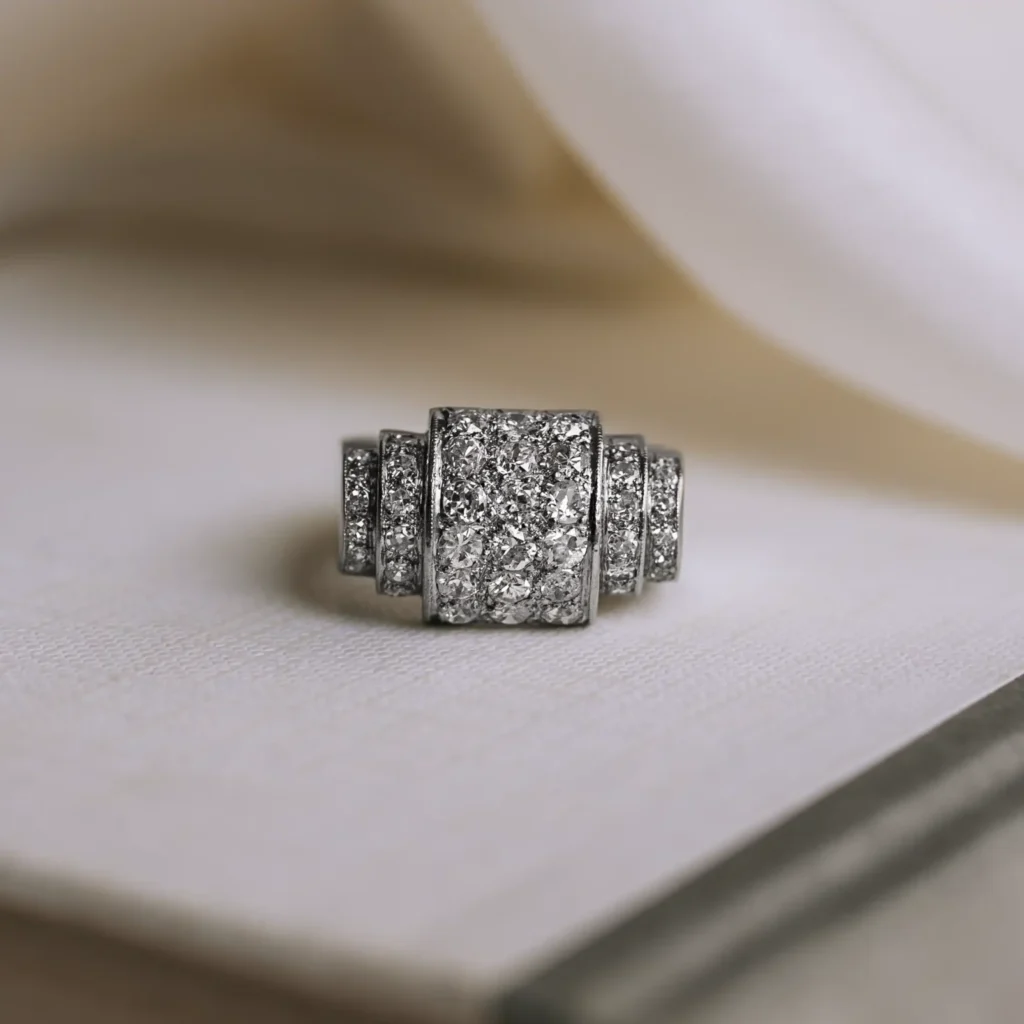
Few materials are as closely associated with an artistic movement as platinum is with Art Deco jewelry.
During the 1920s and 1930s, platinum became the ultimate ally of jewelers seeking to express the modernity, geometry, and sophistication that defined the period.
Art Deco jewelry is characterized by:
- Precise geometric designs.
- Combinations of diamonds and colored gemstones.
- Lightweight and elegant structures.
- Intricate openwork and filigree craftsmanship.
Many of these remarkable creations would have been impossible without the mechanical properties of platinum.
For this reason, a large number of the Art Deco pieces most admired by collectors and jewelry experts were crafted in this precious metal.
Platinum and Diamonds: A Perfect Combination
The relationship between platinum and diamonds is one of the most successful partnerships in jewelry history.
Platinum’s natural white color does not affect the appearance of the stone, allowing diamonds to reflect light with maximum brilliance.
In addition, its strength provides exceptional protection for gemstones, even in delicate settings.
It is no coincidence that many of the most important creations in international high jewelry combine diamonds and platinum.
Why Is Platinum Still So Highly Valued Today?
More than a century after reaching the height of its popularity, platinum remains one of the most sought-after materials among collectors and jewelry enthusiasts.
Its key qualities include:
- Exceptional durability.
- Outstanding resistance to wear.
- Remarkable rarity.
- Timeless elegance.
- The ability to enhance precious gemstones.
These characteristics explain why many antique platinum jewelry pieces have survived to the present day while preserving much of their original beauty.
Platinum in Antique Jewelry
For collectors of antique jewelry, platinum holds a unique appeal.
Not only does it represent one of the most brilliant periods in jewelry history, but it also helps identify specific design eras and offers valuable insight into the evolution of the craftsmanship techniques used by master jewelers.
Pieces created in platinum during the first decades of the 20th century are now considered authentic historical treasures, reflecting an era defined by innovation, creativity, and technical excellence.
A Legacy That Continues to Shine
The story of platinum is also the story of the evolution of modern jewelry.
Its introduction enabled the development of new design possibilities, raised manufacturing standards, and led to the creation of some of the most refined jewelry pieces ever conceived.
At Urbieta Antique, we especially appreciate jewelry that combines beauty, history, and exceptional craftsmanship.
Platinum embodies all of these qualities, making it an essential material for understanding the evolution of fine jewelry and the enduring legacy of the great creations of the 20th century.
Frequently Asked Questions About Platinum Jewelry
Platinum is one of the most exclusive precious metals due to its rarity, strength, and purity. Its naturally white color does not fade over time, making it an ideal choice for high-quality jewelry designed to last for generations.
Although both metals have a similar appearance, platinum is denser, more durable, and purer than white gold. In addition, white gold often requires periodic rhodium plating to maintain its bright white finish, while platinum retains its natural color without the need for additional treatments.
Platinum’s exceptional strength allowed jewelers to create more intricate and delicate designs. This made it possible to produce iconic pieces from the Art Deco and Belle Époque periods, particularly those featuring diamonds and other precious gemstones.
Authentic platinum jewelry is usually marked with hallmarks such as “PLAT,” “PT950,” or “950 Platinum,” indicating its purity. Platinum pieces are also typically heavier than similar-sized white gold jewelry because of the metal’s high density.
Yes. Vintage platinum jewelry is highly sought after by collectors and jewelry enthusiasts because of its quality, exclusivity, and historical significance. Well-preserved antique pieces, especially those featuring diamonds or Art Deco designs, often retain or increase their value over time.

