

Jewelry
The Origins of White Gold: The History of an Alloy That Transformed Jewellery
Oct
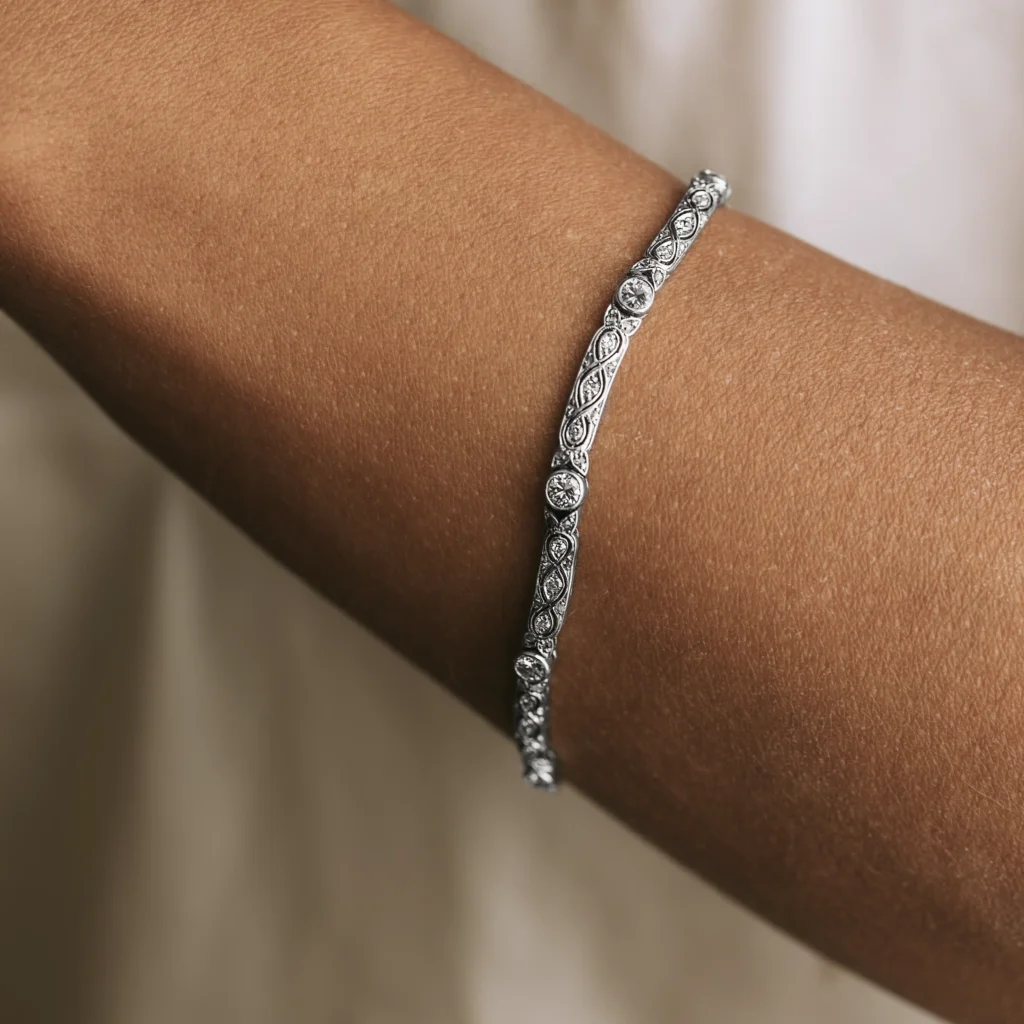
White gold is an alloy of gold and other metals, such as palladium or nickel, which alter its natural yellow colour to create a whiter appearance. Its development and commercial expansion in the early 20th century reflected the search for alternatives to platinum, while its growing popularity was closely linked to Art Deco jewellery of the 1920s and 1930s. At Urbieta Antique, antique and vintage white gold jewellery reveals how this material transformed the design of rings, earrings and bracelets, particularly pieces set with diamonds.
White gold brought together the qualities of gold and an appearance closer to that of platinum.
Its emergence coincided with a period of extraordinary creativity, particularly during the Art Deco movement, and marked a turning point in jewellery design.
At Urbieta Antique, where we select and restore antique and vintage jewellery from different periods, white gold is one of the materials that helps us understand how jewellery techniques and tastes evolved throughout the 20th century.
When and Why Was White Gold Developed?
Modern white gold was developed primarily during the early decades of the 20th century, when jewellers were seeking alternatives to platinum, a metal that had become increasingly prominent in European fine jewellery.
Platinum offered important advantages: its naturally white colour, its strength and the ability to create delicate settings capable of holding gemstones securely and precisely. However, its high cost and limited availability encouraged the search for other materials.
The solution was to develop gold alloys containing metals that could alter gold’s natural yellow colour.
Although various formulations and experiments existed, white gold began to gain commercial popularity during the 1910s and 1920s, later establishing itself as one of the most widely used materials in jewellery.
Its popularity was not driven solely by economic considerations. It also reflected an aesthetic shift: jewellers wanted white metals that would complement the brilliance of diamonds and suit the new designs of the 20th century.
What Exactly Is White Gold, and How Is It Made?
Unlike platinum, which is naturally white, white gold is an alloy. It is made by combining gold with other metals that modify its colour and mechanical properties.
These metals may include palladium, silver, copper and, in certain formulations, nickel. The precise composition varies according to the manufacturer, the period and the desired characteristics.
For example, 18-carat white gold contains 75% pure gold and 25% other metals. This preserves the gold content associated with an 18-carat piece, even though its appearance differs from that of yellow gold.
White gold does not always have a bright white colour on its own. Some alloys have slightly yellowish or greyish undertones.
For this reason, many contemporary pieces receive rhodium plating, a precious metal coating that provides a bright white finish. This coating can wear away with use and may require maintenance, although not all white gold jewellery is rhodium-plated.
White Gold and the Art Deco Jewellery Revolution
The growing popularity of white gold coincided with one of the most influential movements in jewellery history: Art Deco, particularly associated with the 1920s and 1930s.
Geometry, symmetry, contrasts and combinations of diamonds with coloured gemstones defined an entirely new aesthetic.
White metals were particularly well suited to these designs, providing a setting that enhanced the brilliance of diamonds and allowed jewellers to create exceptionally elegant compositions.
Although platinum retained a prominent place in fine jewellery, white gold became an important alternative and helped bring this aesthetic to a wider range of pieces.
At Urbieta Antique, we particularly value Art Deco jewellery for its innovation and craftsmanship. The settings, stone-setting techniques and combinations of materials reveal an approach to jewellery design that still feels remarkably contemporary.
This evolution can also be seen in our selection of Art Deco rings, which brings together different designs and materials characteristic of the period.
White Gold and Platinum: What Are the Differences?
Although they may look similar at first glance, white gold and platinum are different materials.
Platinum is a naturally white precious metal, whereas white gold is an alloy whose colour depends on the metals added to it.
There are also differences in their density, wear characteristics and maintenance requirements.
| Characteristic | White Gold | Platinum |
|---|---|---|
| Composition | An alloy of gold and other metals | A precious metal used in high-purity alloys |
| Colour | White or greyish, depending on the alloy | Naturally greyish-white |
| Density | Generally lower | Generally higher |
| Finish | May have rhodium plating | Does not require rhodium to achieve its colour |
| Maintenance | Depends on the alloy and finish | May develop a surface patina with use |
Neither material is necessarily better in every situation. The choice depends on the design, the type of jewellery, the properties of the metal and the wearer’s preferences.
To explore these differences further, read our article Platinum in Jewellery: The Metal That Conquered 20th-Century Fine Jewellery, where we explain its history and its importance in the outstanding creations of the period.
Why Did White Gold Become a Natural Partner for Diamonds?
One reason for white gold’s success was its ability to complement diamonds visually.
White settings create a bright, understated surround for gemstones, particularly in designs intended to make the diamond the focal point.
This quality encouraged its use in solitaire rings, cluster rings, earrings and diamond wedding bands, all of which remain prominent in jewellery today.
However, the colour of the metal can also influence how we perceive a gemstone’s colour. When examining an antique piece, it is therefore important to consider the diamond and its setting together.
At Urbieta Antique, we pay particular attention to this relationship, because a well-designed piece maintains a balance between its gemstones, materials and overall design.
Our diamond jewellery collection offers the opportunity to discover different interpretations of this combination throughout history.
White Gold in Antique and Vintage Jewellery: How to Identify and Assess It
The presence of white gold can provide clues about when a piece was made, but it cannot establish its age on its own.
To identify an antique or vintage piece correctly, it is also necessary to examine its hallmarks, manufacturing techniques, stone settings, style and any later alterations.
Some pieces also combine yellow and white gold within the same setting, making use of the aesthetic qualities of both materials.
At Urbieta Antique, we select each piece individually, examining its materials, gemstones, design and condition. The pieces then pass through our Madrid workshop, where they are inspected and restored when necessary, with respect for their original characteristics.
This work is particularly important for antique white gold jewellery, as inappropriate intervention could alter finishes, settings or details characteristic of its period.
The aim is to preserve each piece’s authenticity and allow it to continue being worn without losing the qualities that make it special.
Buying Antique White Gold Jewellery at Urbieta Antique
White gold remains one of the most appreciated materials in jewellery thanks to its elegance and versatility. Its understated appearance allows diamonds and coloured gemstones to stand out, while complementing both classic and contemporary styles.
At Urbieta Antique, we bring together an ever-changing selection of antique and vintage jewellery made from different precious metals, including white gold, yellow gold and platinum.
From antique and vintage rings to earrings with a history, each piece is selected for its quality, individuality and craftsmanship.
Our team can help you understand the characteristics of each piece, learn about its materials and find jewellery that suits your preferences.
The emergence of white gold was more than the introduction of a new alloy. It was part of a transformation that changed jewellery design forever.
More than a century later, its legacy remains visible in some of the most elegant creations in antique and contemporary jewellery.
Frequently Asked Questions About White Gold
Modern white gold began to be developed and commercialised during the early decades of the 20th century, particularly in the 1910s and 1920s. Its growing popularity was linked to the search for alternatives to platinum and increasing demand for white jewellery.
Yes. White gold is an alloy containing genuine gold combined with other metals. In the case of 18-carat white gold, 75% of its composition is pure gold.
White gold is a gold alloy, whereas platinum is a naturally white precious metal. They also differ in density, wear characteristics and maintenance requirements.
Some white gold alloys have a slightly warm undertone. When a piece is rhodium-plated, wear to the coating can make the alloy’s original colour more visible. This does not necessarily mean the gold is of poor quality.
Not necessarily. If both are 18-carat, they contain the same proportion of pure gold. Their prices can vary depending on the alloying metals, manufacturing process, finish, design and other factors.
