

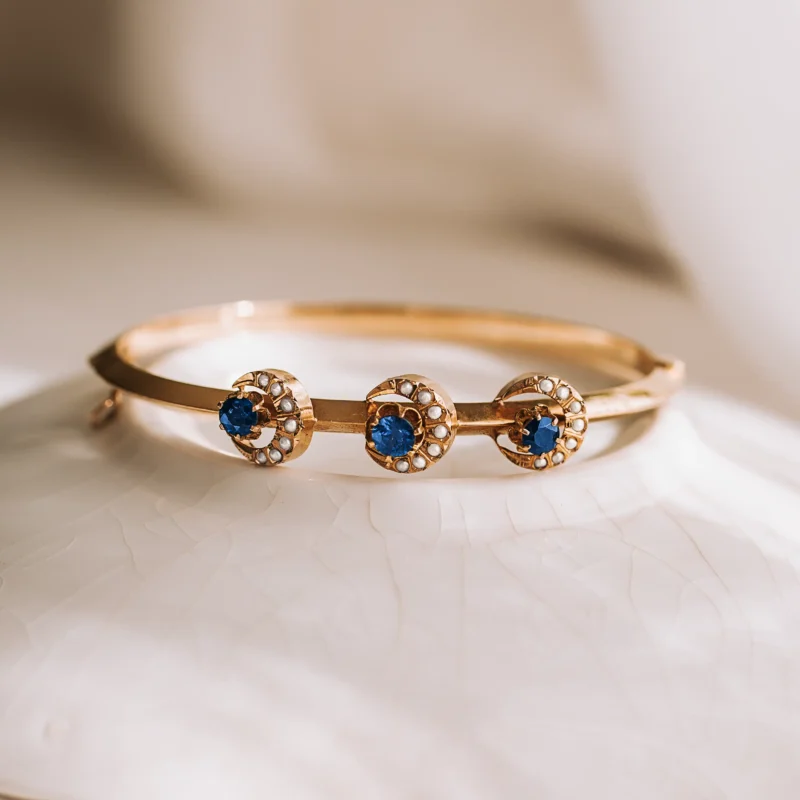
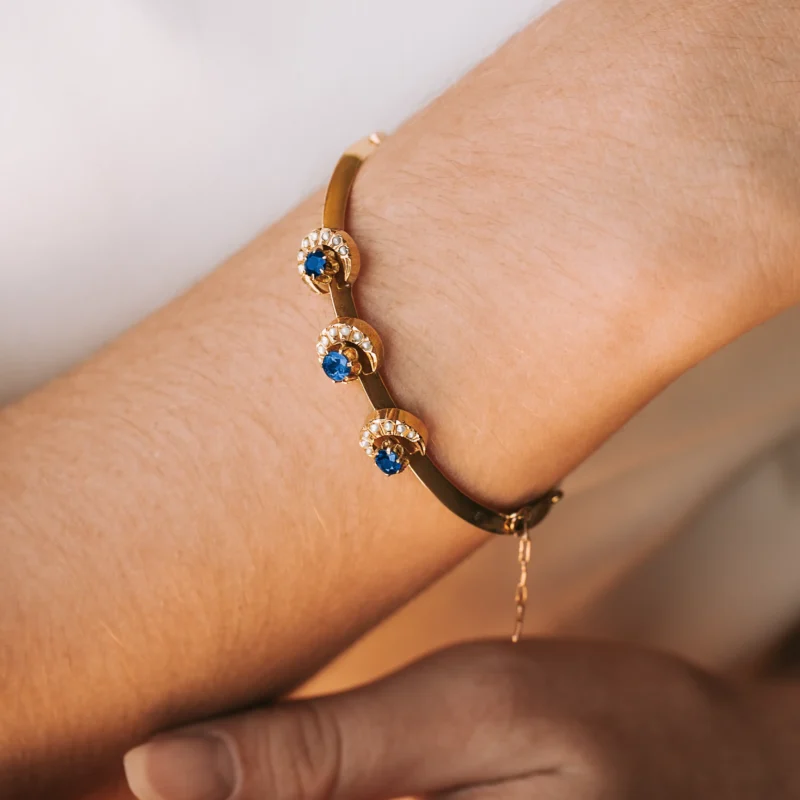
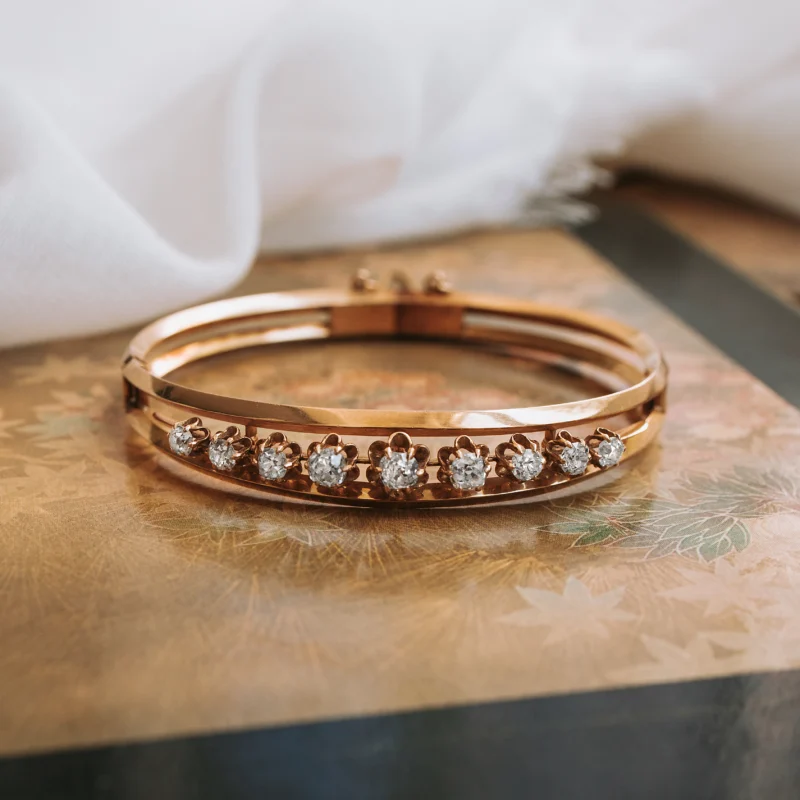
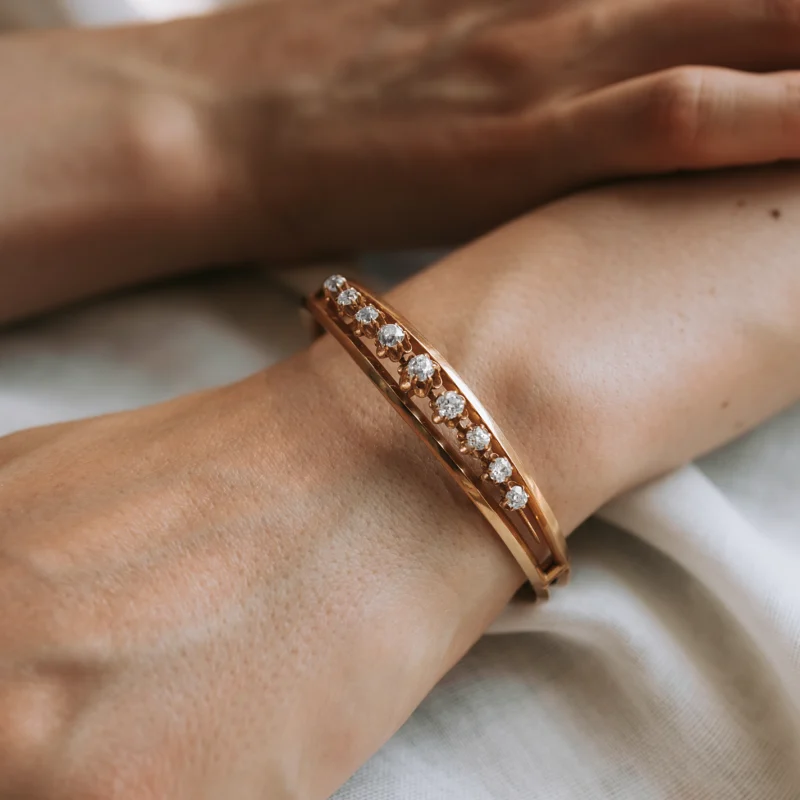
Vintage bangles at Urbieta Antique are structured bracelets that bring elegance and definition to the wrist. Our collection features pieces selected for their design, quality and distinctive character.
Vintage Bangles: Elegance and Character for Your Wrist
Bangle bracelets retain their shape, creating a distinctive silhouette around the wrist. Their versatile design makes them ideal for wearing as a statement piece or pairing with other jewellery, whether for everyday wear or a special occasion.
Explore the collection of vintage bangles at Urbieta Antique and find a piece that reflects your personal style. A selection for those who appreciate fine details and the enduring elegance of vintage jewellery.


Frequently Asked Questions About Rigid Bracelets
Check the material, internal measurements, weight and condition. Request photographs of the interior, hallmarks, clasp and hinges, together with information about repairs or alterations. Confirm whether the bangle is a closed slip-on style, hinged or open, as this affects the fit. Also review the return conditions so you can check how it fits when it arrives.
Authenticity should be assessed by considering hallmarks, manufacturing techniques, design, materials and available documentation together. Marks may provide information about the metal or maker, but they cannot establish the piece’s age on their own. An antique jewellery specialist can assess whether these details match the attributed period and identify replaced components.
Check for dents, distortion, cracks, visible solder repairs and wear to the clasp or hinges. If the bangle contains gemstones, look for missing stones or damaged settings. Ask for close-up photographs and a video showing the opening mechanism. A clasp that does not engage properly or a loose hinge warrants professional inspection before the bangle is worn.
For frequent wear, a bangle made from gold alloy throughout generally offers maintenance advantages over a gold-plated piece, whose surface coating can wear away through friction. However, durability also depends on gold fineness, thickness and construction. Check whether the piece is hollow: a bangle can be made from genuine gold while still having a delicate structure.
A closed bangle must pass over the widest part of your hand, so measuring your wrist alone is not enough. For hinged or open bangles, the internal space and shape are particularly important. Request the internal diameter, or both internal dimensions for an oval bangle, and compare them with a bangle you find comfortable. Avoid choosing solely by external measurements.
If it contains gemstones, the absence of an independent report may leave uncertainty about their identity, whether they are natural or laboratory-grown, and any detectable treatments. For a bangle without gemstones, verifying the metal, fineness, construction and attributed age is more relevant. A gemstone report alone does not establish the historical authenticity of the entire bangle.
Ask what work was carried out, who performed it and whether any clasps, hinges, gemstones or sections of the setting were replaced. Check whether the piece was resized, soldered, polished or replated. Request photographs taken before restoration, if available, and a written description of the work. You should also ask about recommended care and any limitations on wear.
A gemologist should first confirm that the stones are diamonds and determine whether they are natural or laboratory-grown. They can then examine the cutting characteristics: some antique cuts feature small tables, high crowns and visible culets. However, an antique-style cut does not establish a stone’s age or prove that it is original to the bangle, because these designs are also reproduced today.
Follow the restorer’s instructions and avoid impacts, pressure and movements that could distort the piece. Remove it for exercise or household tasks, store it separately from other jewellery and use a soft cloth for surface maintenance. If it contains gemstones, enamel or delicate repairs, seek advice before using immersion, steam, ultrasonic cleaning or cleaning products.
The decision depends on its construction, condition and historical significance. Before altering it, ask a specialist whether a limited adjustment is possible and how it would affect the original features. Preserving the integrity of signed, rare or well-preserved pieces can be particularly important. If resizing requires extensive alteration, consider choosing a different size and document any work that is ultimately carried out.

