

Jewelry
Old Cut Diamonds: Types, Characteristics and Timeless Beauty
Nov
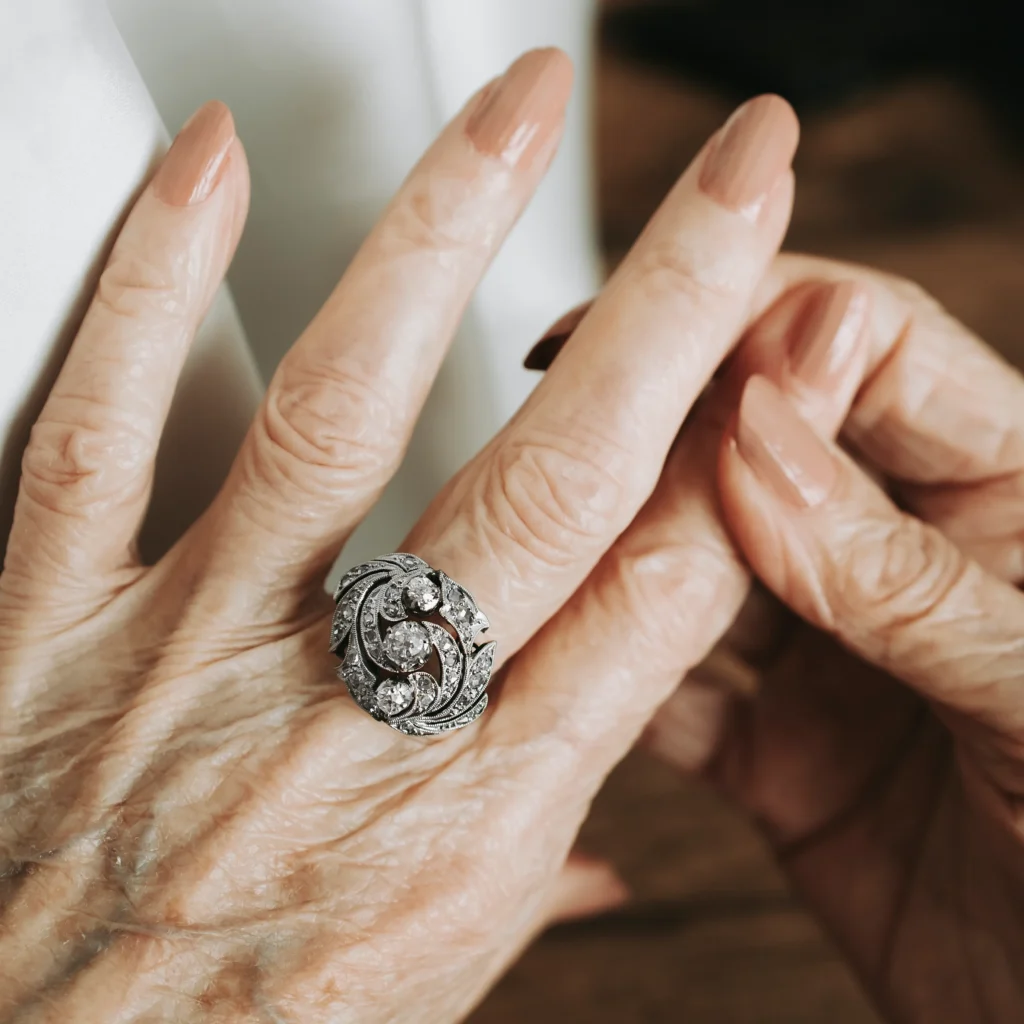
Old cut diamonds are gemstones shaped using historical cutting techniques, recognised for their broad facets, distinctive proportions and soft, deep flashes of light. Particularly popular in jewellery from the 18th, 19th and early 20th centuries, they include styles such as the rose cut, old European cut and old cushion cut. At Urbieta Antique, specialists in antique and vintage jewellery based in Madrid, we select historic diamond jewellery distinguished by its authenticity, traditional craftsmanship and timeless beauty.
Not all diamonds sparkle in the same way. Some stand out for their intense, precisely defined brilliance, while others reveal a softer, deeper light full of subtle nuances. It is within this second category that much of the charm of old cut diamonds lies, preserving an approach to jewellery-making that predates modern cutting standards.
Originally shaped using traditional handcrafted techniques, these diamonds featured in some of the most extraordinary jewellery of the 18th, 19th and early 20th centuries. Their proportions, facets and individual characteristics give them a personality that is difficult to reproduce.
At Urbieta Antique, specialists in antique and vintage jewellery, old cut diamonds hold a special place. We value them not only for their beauty, but also for the craftsmanship, knowledge and history they represent.
What Is an Old Cut Diamond?
An old cut diamond is a diamond featuring a historical cutting style developed before the modern brilliant cut became established, or a diamond deliberately cut to reproduce those traditional characteristics.
Unlike many contemporary diamonds, whose proportions are calculated to optimise specific light effects, historical diamond cuts followed different technical and aesthetic principles.
Diamond cutters frequently worked by hand, adapting their techniques to the natural shape of the original crystal and using tools that were considerably less advanced than those available today.
The result was diamonds with broader facets, distinctive proportions and different patterns of sparkle, often producing a warm glow and a remarkable sense of depth.
It is important to distinguish between two concepts: a diamond cut more than a century ago is a genuinely antique stone, whereas a diamond cut today using historical proportions is a modern diamond with an antique-inspired cut.
Both may share a similar appearance, but they do not necessarily possess the same historical value.
Main Types of Old Cut Diamonds
The evolution of diamond cutting took place gradually, giving rise to different styles that can still be found in antique and vintage jewellery today.
Understanding these historical cuts helps explain why old diamonds can look so different from modern brilliant-cut stones.
Rose Cut Diamonds: Delicacy and Soft Brilliance
The rose cut is one of the most characteristic styles found in historical jewellery.
Rose cut diamonds generally have a flat base and an upper surface formed by triangular facets that converge towards a central point or small central area.
Their appearance resembles a rosebud, which is where the name originates.
Widely used during the 18th and 19th centuries, rose cut diamonds produce gentle reflections and are particularly attractive in delicate compositions and romantic-inspired jewellery.
Their understated brilliance makes them especially appealing to those who appreciate the subtle beauty of antique gemstones.

Old European Cut Diamonds: The Predecessor of the Modern Brilliant
The old European cut, also known as the Old European Cut (OEC), became particularly popular during the late 19th and early 20th centuries.
These diamonds typically feature a rounded outline, a high crown, a relatively small table and a culet that may be visible.
Their facets produce broad flashes of light and an appearance that differs from the modern round brilliant cut.
The old European cut is one of the most highly regarded historical diamond cuts in antique rings, particularly solitaire designs and jewellery from the late Victorian, Edwardian and early 20th-century periods.
Its distinctive proportions give each diamond an individual character, making it an appealing choice for collectors and lovers of antique jewellery.
Old Cushion Cut Diamonds: Elegance and Individuality
The old cushion cut, closely associated with historical Old Mine Cut diamonds, is recognised by its square or rectangular outline with softly rounded corners.
These diamonds often feature a high crown, a small table and facets that create distinctive flashes of light.
Old cushion cuts played an important role in jewellery during the 18th and 19th centuries and remain a reference point for those seeking diamonds with a classical appearance.
Although rose cuts, old European cuts and old cushion cuts differ in their structure and visual characteristics, they share an essential quality: their beauty depends not only on their interaction with light, but also on the individual features of each gemstone.
Old Cut Diamonds vs Modern Brilliant Cut Diamonds
The main difference between old cut diamonds and modern brilliant cut diamonds is not necessarily their quality, but the way they have been designed to interact with light.
The modern round brilliant cut, developed and refined during the 20th century, uses carefully calculated proportions to achieve a combination of brilliance, light dispersion and scintillation.
Historical diamond cuts, by contrast, may feature larger facets, higher crowns and less standardised proportions.
This creates a noticeably different visual experience.
While many modern brilliant cut diamonds produce numerous small, intense flashes of light, old cut diamonds can display broader, slower flashes that are particularly attractive under certain lighting conditions.
This does not mean that one type of diamond is inherently better than the other.
They simply represent two different interpretations of a diamond’s beauty.
At Urbieta Antique, we particularly appreciate this diversity because it allows us to discover jewellery with its own identity, far removed from the uniformity of many contemporary creations.
Are Old Cut Diamonds More Valuable?
The value of an old cut diamond depends on several factors.
As with any diamond, its carat weight, colour, clarity, cut quality and condition must all be considered.
However, historical diamonds may also be valued for the rarity of their particular characteristics, their documented provenance and the interest they generate among collectors and enthusiasts of antique jewellery.
An old cut diamond is not necessarily more expensive than a modern diamond.
Nevertheless, exceptional historical stones can command significant prices because of their quality, rarity and individuality.
When a diamond forms part of an antique jewel, its value is not determined by the gemstone alone. The setting, design, historical period and quality of craftsmanship also contribute to the overall value of the piece.
To better understand these factors, we recommend exploring our guides to diamond colour and its influence on value and diamond clarity and its importance in antique jewellery.
These articles explain the gemmological characteristics used to assess diamonds and why they should always be considered within the context of the complete jewel.
Old Cut Diamonds in Antique and Vintage Jewellery
One reason old cut diamonds continue to attract so much interest is their connection with some of the most iconic designs in historical jewellery.
They can be found in solitaire rings, cluster rings, three-stone rings, earrings and many other compositions that have evolved over the centuries.
In solitaire rings, the diamond takes centre stage, allowing its proportions and distinctive flashes of light to be fully appreciated.
Cluster rings, meanwhile, arrange several diamonds around a central gemstone, creating intricate compositions with remarkable visual richness.
These floral-inspired arrangements are among the most recognisable designs in antique jewellery.
They also reflect the creativity of historical jewellers, who combined gemstones of different shapes and sizes to achieve harmonious, highly individual pieces.
For those drawn to the elegance of a single central gemstone, our selection of antique and vintage solitaire rings offers an example of how old cut diamonds can become the defining feature of a jewel.
Each design demonstrates how the setting and the diamond work together to create a distinctive aesthetic.
Why Choose Jewellery with Old Cut Diamonds?
Choosing jewellery featuring old cut diamonds means embracing an aesthetic that preserves the character of earlier periods.
Their main attractions include their individual proportions, distinctive sparkle and close connection with traditional jewellery-making techniques.
They are also an appealing alternative for those looking for vintage engagement rings or special jewellery that stands apart from more conventional contemporary designs.
At Urbieta Antique, we source antique and vintage jewellery from different origins, carefully examine each piece in our Madrid workshop and provide independent gemmological certification.
Our approach focuses on preserving the authenticity, craftsmanship and individuality of every jewel.
In addition, through our Urbieta Originals collection, we give recovered old cut diamonds a new life by incorporating them into historically inspired designs created for contemporary wear.
This combination of tradition and modern creativity allows historic gemstones to be appreciated by a new generation without losing the distinctive character of their original cuts.
By choosing an old cut diamond, jewellery lovers can enjoy a piece that combines aesthetic individuality with a tangible connection to the past.
Buying Old Cut Diamond Jewellery at Urbieta Antique
An antique diamond jewel is much more than a combination of precious metals and gemstones.
It is also the expression of a historical period, a traditional craft and a particular interpretation of beauty.
At Urbieta Antique, we carefully select each piece for its quality, authenticity and individuality, paying special attention to the characteristics of its diamonds and the overall harmony of the design.
Our antique and vintage jewellery collection brings together pieces from different periods and styles, ranging from delicate designs to more elaborate creations.
Whether you are looking for a distinctive solitaire, a vintage engagement ring or an antique jewel with historical character, understanding the characteristics of old cut diamonds can help you make a more informed choice.
Our team can guide you through the features of each piece and help you discover jewellery that reflects your personal preferences.
Because old cut diamonds remind us that beauty does not need to be perfectly uniform to be extraordinary.
Frequently Asked Questions About Old Cut Diamonds
An old cut diamond is a diamond featuring a historical cutting style developed before the modern brilliant cut became established, or a modern diamond cut to reproduce those traditional characteristics. Old cuts are generally recognised for their distinctive proportions, broader facets and individual patterns of brilliance.
Old cut diamonds may feature high crowns, small tables, broad facets and visible culets. However, these characteristics vary depending on the historical cutting style. A qualified gemmologist or antique jewellery specialist can help identify the cut and assess whether the diamond is genuinely antique.
The main difference lies in their proportions and facet arrangements. Modern brilliant cut diamonds are designed to optimise specific light effects, while old cut diamonds reflect historical cutting techniques and proportions. As a result, old cuts often display broader, softer flashes of light.
Not necessarily. The price of an old cut diamond depends on its carat weight, colour, clarity, cut quality, condition and market demand. Some exceptional historical diamonds may command higher prices because of their rarity, provenance or distinctive characteristics.
Yes. Old cut diamonds are particularly attractive in antique and vintage engagement rings, including solitaire and three-stone designs. Their distinctive proportions, historical character and individual sparkle make them an appealing choice for anyone seeking an engagement ring with personality and timeless elegance.
At Urbieta Antique, you can discover a carefully selected collection of antique and vintage jewellery featuring historical diamond cuts, alongside Urbieta Originals creations incorporating recovered old cut diamonds. Each piece is individually selected and accompanied by independent gemmological certification.

