

Jewelry
Chevalier Rings: History, Character and Unique Pieces Selected by Urbieta Antique
Aug
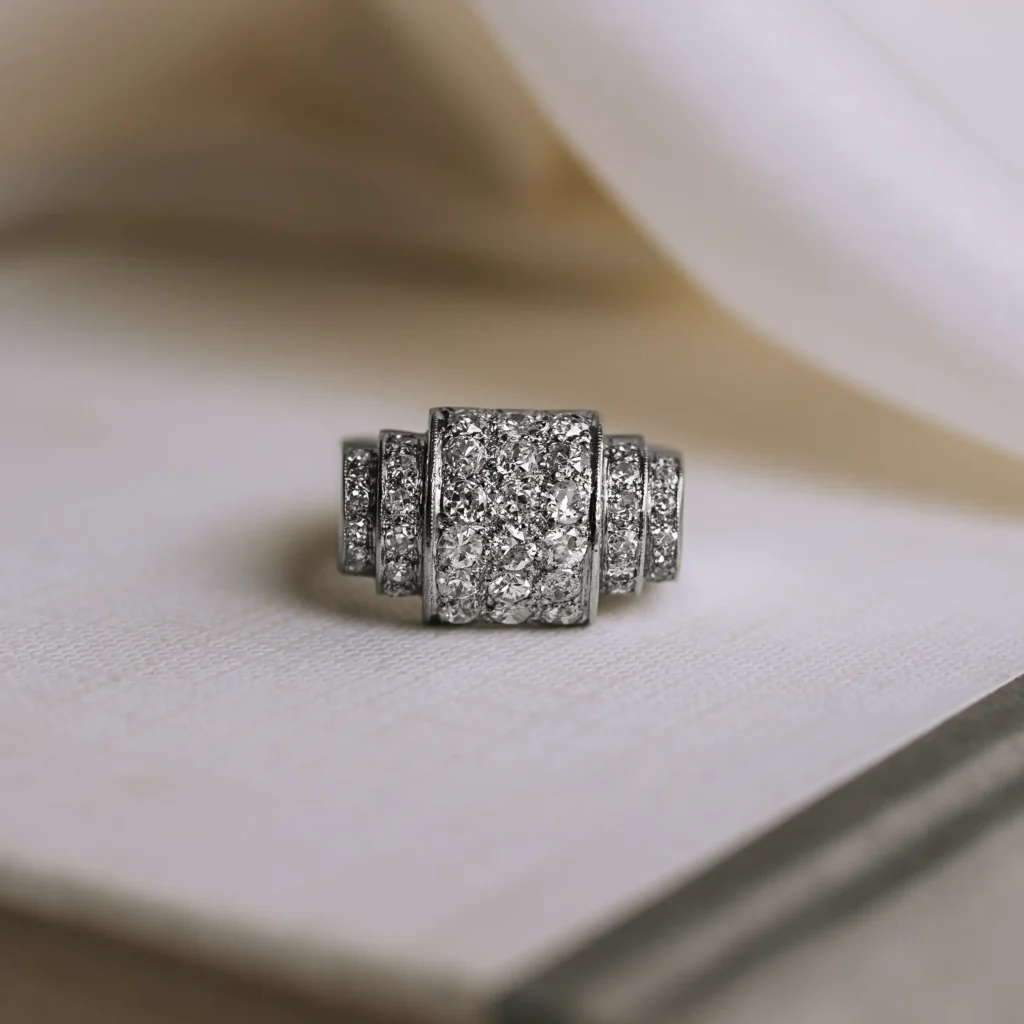
Chevalier rings are historic rings linked to traditional signet rings and are distinguished by their broad, prominent upper section. Although they traditionally featured coats of arms, initials or family emblems, over time they evolved into ornamental designs set with diamonds, rubies, sapphires and other precious stones. At Urbieta Antique, we select antique and vintage chevalier rings for their authenticity, craftsmanship, condition and unique character.
At Urbieta Antique, we have a particular fondness for jewellery that combines history, uniqueness and an aesthetic that remains relevant decades—or even centuries—after it was created. Chevalier rings perfectly embody this philosophy.
That is why, when we select an antique or vintage chevalier ring, we do not simply look for an attractive piece. We consider the personality of its design, the quality of its materials and gemstones, its setting, craftsmanship, condition and all the details that reveal the character of the period in which it was made.
Chevalier rings continue to form part of our selection of antique and vintage jewellery, with pieces that demonstrate the many interpretations this design has undergone throughout its history.
But what exactly is a chevalier ring? Where does its name come from? How is it connected to traditional signet rings, and what should we consider when choosing an antique piece?
What Is a Chevalier Ring?
A chevalier ring is generally characterised by an upper section that is broader and more prominent than the band. Depending on the period and design, this surface may be oval, rounded, square or more geometric in shape.
Traditionally, the upper section could feature a family coat of arms, initials or an identifying symbol. However, as jewellery evolved, these pieces gradually changed, and chevalier rings began to be decorated with diamonds, rubies, sapphires and other precious stones.
This diversity is precisely one of the aspects that most interests us when selecting chevalier rings at Urbieta Antique. Within the same category, we find completely different pieces: from understated designs linked to the tradition of signet rings to much more sophisticated creations in which gemstones take centre stage.
This means that every antique chevalier ring has its own personality and that finding two identical examples is particularly difficult.
Where Does the Name Chevalier Come From?
The word chevalier means knight in French, a term that immediately brings us closer to the historical origins of this piece of jewellery.
For centuries, signet rings were associated with the nobility and families of a particular social standing. They were engraved with coats of arms, initials or emblems that identified their owners and, during certain historical periods, could even be used to authenticate documents by pressing the design into wax.
Before becoming an ornamental piece, therefore, this type of ring fulfilled a function connected with identity, lineage and belonging.
Understanding this historical context helps explain why antique chevalier rings possess such a distinctive personality. Their design was not created merely for aesthetic purposes: it derives from a type of jewellery conceived to represent the person wearing it.
From Signet Ring to Gemstone Chevalier Ring
The origins of chevalier rings can be found in the signet rings used since ancient times. However, as jewellery-making techniques evolved, their designs changed too.
Jewellers began crafting increasingly sophisticated settings, incorporating engravings, enamel and gemstones. The ring gradually ceased to serve an exclusively identifying function and also became a way of expressing personal taste and individuality.
Magnificent examples of this evolution can be found throughout the 19th and 20th centuries. Settings adopted new proportions, increasingly ornamental designs appeared, and diamonds and coloured gemstones transformed the surface of the ring.
This evolution is particularly visible in the antique and vintage jewellery selected by Urbieta Antique, where we find pieces that preserve the characteristic structure of the chevalier ring while reinterpreting it according to the aesthetic codes of different periods.
And that is precisely what we look for in antique jewellery: not merely age, but identity.
Is a Chevalier Ring the Same as a Signet Ring?
Although the two terms are closely related, they do not mean exactly the same thing.
A traditional signet ring served an identifying purpose and usually featured a coat of arms, monogram, initials or personal symbol. Its surface could be used to impress the design into wax.
The chevalier ring, however, has evolved into a broader concept within jewellery. It retains the characteristic structure with a more prominent upper section, but it may be decorated with gemstones and does not need to feature an element intended to function as a seal.
This distinction explains why we can now find everything from antique heraldic chevalier rings to spectacular chevalier rings set with rubies, diamonds or sapphires.
What Does Urbieta Look for When Selecting an Antique Chevalier Ring?
Buying antique jewellery is very different from purchasing a contemporary mass-produced piece. Two seemingly similar chevalier rings can present enormous differences in terms of quality, age, materials, condition and uniqueness.
That is why every piece at Urbieta Antique is individually selected.
We examine the construction of the setting and the techniques used to create it, assess the precious metals and analyse the characteristics of its gemstones. We also pay particular attention to its condition and any alterations the piece may have undergone throughout its history.
Antique diamonds, for example, may feature cuts with very different characteristics from those of modern diamonds. The way they interact with light, their proportions and even the small irregularities resulting from traditional hand-cutting all form part of the personality of the piece.
Our aim is not to gather a large number of identical pieces, but precisely the opposite: to select jewellery that possesses something truly special.
For this reason, our collection is constantly evolving. Antique jewellery is, by definition, limited and unique. Once a piece finds a new owner, it is not always possible to find an identical one to replace it.
Ruby, Sapphire and Diamond Chevalier Rings: One Jewel, Many Interpretations
One of the greatest attractions of this type of ring is the enormous variety of designs available.
Yellow gold is deeply associated with the most traditional chevalier rings and the heritage of historical signet rings. However, the introduction of gemstones gave rise to completely different creations.
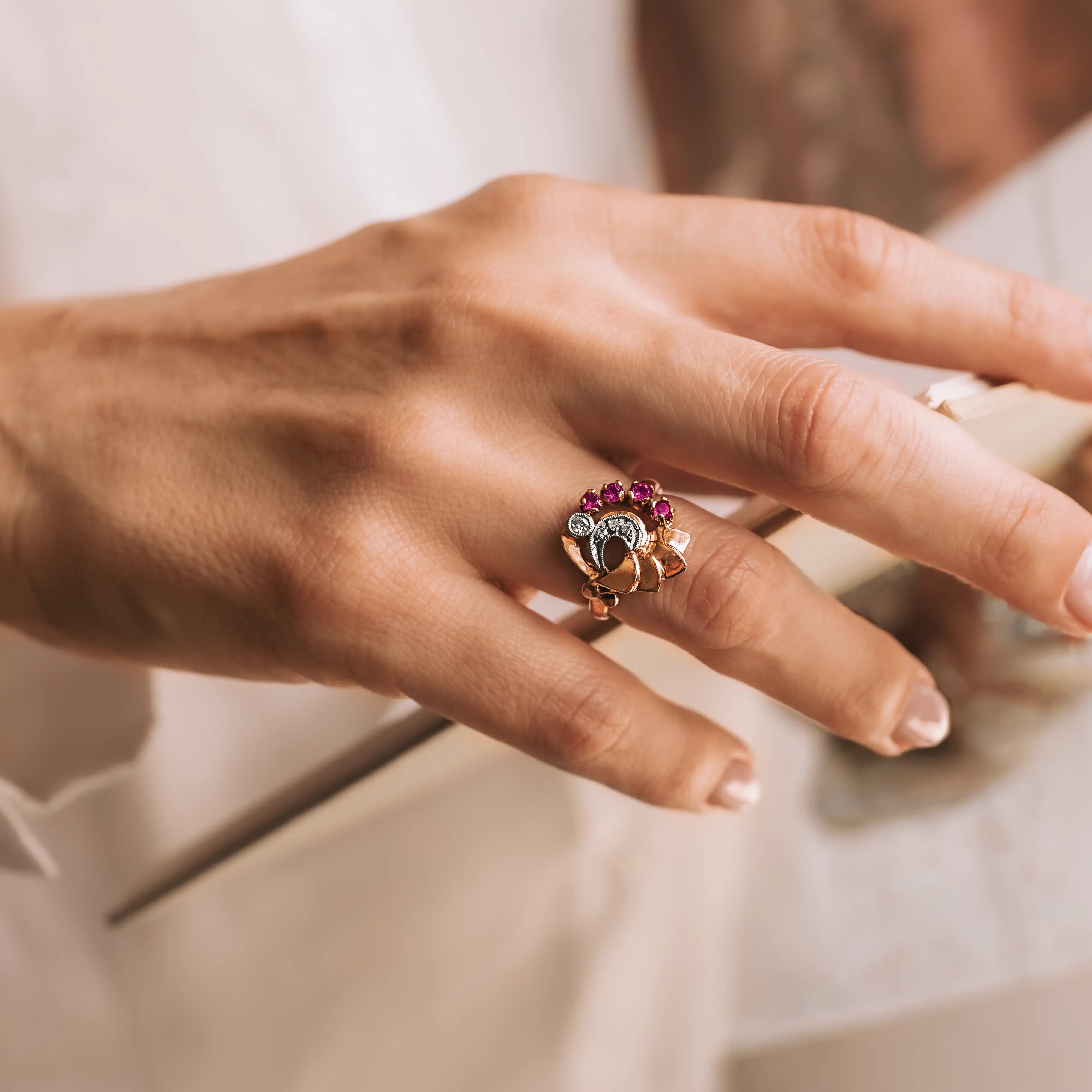
A ruby chevalier ring can possess an intense and sophisticated personality. Sapphires introduce depth and contrast, particularly when paired with diamonds. Diamond chevalier rings transform the surface of the ring into a play of light while preserving the bold presence characteristic of this setting.
This variety makes choosing a chevalier ring an especially personal experience. It is not simply a matter of deciding between different gemstones, but of finding a piece whose period, proportions, design and character resonate with the person who will wear it.
From Men’s Jewellery to an Entirely Contemporary Piece
Historically, chevalier rings were closely associated with men’s jewellery because of their relationship with aristocracy, heraldry and signet rings.
However, their evolution is particularly fascinating.
The incorporation of gemstones, new proportions and more ornamental designs led these rings to become part of women’s jewellery collections as well. Over time, the boundaries between men’s and women’s jewellery gradually disappeared, turning the chevalier ring into an essentially unisex piece.
Today, its bold appearance is precisely one of the reasons why it has attracted renewed interest.
At Urbieta, we see chevalier rings as pieces of jewellery with an exceptional ability to express personality. They may be classic or daring, understated or statement-making, but they rarely go unnoticed.
Why Are Chevalier Rings Back in Fashion?
The renewed interest in chevalier rings is part of a much broader movement: the rediscovery of antique and vintage jewellery as an alternative to mass-produced pieces.
People are increasingly looking for objects that have a story behind them and are not identical to thousands of industrially manufactured items.
An antique chevalier ring possesses precisely these qualities.
Its traditional craftsmanship, the subtle characteristics of its setting, the cut of its gemstones and the natural signs of its history make every example extremely difficult to reproduce.
Furthermore, its bold aesthetic is perfectly suited to a contemporary approach to jewellery, in which a single piece can become the focal point of an entire look.
It is not so much that chevalier rings have returned.
Perhaps they never truly went away.
How Can You Tell Whether an Antique Chevalier Ring Is Authentic?
This is one of the most important questions to consider when buying any type of antique jewellery.
The age of a piece cannot be determined solely by its appearance. Assessing a chevalier ring requires a combined analysis of its setting, manufacturing techniques, type of stone setting, metals, possible hallmarks and the characteristics of its gemstones.
A piece of jewellery may also have undergone alterations, restorations or replacements over the decades.
For this reason, it is particularly important to purchase these pieces from antique jewellery specialists who can examine, select and document each jewel.
At Urbieta Antique, this expertise forms an essential part of our work. We do not want our clients to choose a jewel based solely on its appearance. We want them to understand what they are holding and what makes that particular piece special.
How to Wear a Chevalier Ring Today
One of the great advantages of this type of ring is that it does not require a special context to work beautifully.
An antique chevalier ring can become the only statement jewel on the hand or be combined with simpler rings to create an entirely personal composition.
Today, there are no rules regarding which finger it should be worn on. Although signet rings were historically associated with particular social conventions, chevalier rings can now be worn on the little finger, ring finger, middle finger or even the index finger.
The most important consideration is finding a proportion that feels comfortable and flattering.
This contemporary freedom is particularly fascinating: a jewel that originated within numerous social conventions can now be worn exactly as each individual chooses.
Buying an Antique Chevalier Ring from Urbieta Antique
Choosing an antique chevalier ring means acquiring a piece that is unlikely ever to be repeated.
At Urbieta Antique, we select antique and vintage jewellery according to its quality, authenticity, condition, craftsmanship and uniqueness. Our collection is constantly changing because every piece has its own history and availability.
If you are looking for a chevalier ring, we recommend exploring the pieces currently available and allowing yourself to be surprised. Sometimes the search begins with a particular gemstone or historical period and ends with the discovery of a completely different jewel that simply feels right.
Our team can offer personalised advice on the characteristics of each piece, its gemstones, setting and all the details that make it special.
Because buying antique jewellery is not simply about choosing something beautiful.
It is about finding a unique piece that already has a history and deciding to continue it.
Frequently Asked Questions about Chevalier Rings
A chevalier ring is a ring generally characterized by a wider or more prominent top than the band. Historically, it is related to signet rings, although over time it evolved into ornamental designs made of precious metals and decorated with diamonds and other gemstones.
"Chevalier" means "gentleman" in French. In jewelry, the term is used to describe a type of ring whose origin is related to ancient signet rings and which currently encompasses very diverse designs, including models with precious stones.
Their origins lie in signet rings, historically used as symbols of identity and belonging. These could incorporate coats of arms, initials, or emblems and, in certain periods, served to authenticate documents by being imprinted on wax. Over time, they evolved to also become ornamental jewelry.
Not exactly. The traditional signet ring incorporated an identifying element and originally had a practical function. The term "chevalier" is now used more broadly to describe rings inspired by that structure, including pieces decorated with diamonds, rubies, sapphires, or other gemstones.
Although historically closely associated with men's jewelry, chevalier rings are now completely unisex. There are many different designs, proportions, and stone combinations, so they can suit any style.
There's no set rule. It can be worn on the pinky, ring, middle, or index finger, depending on the size of the ring, its proportions, and personal preference.

